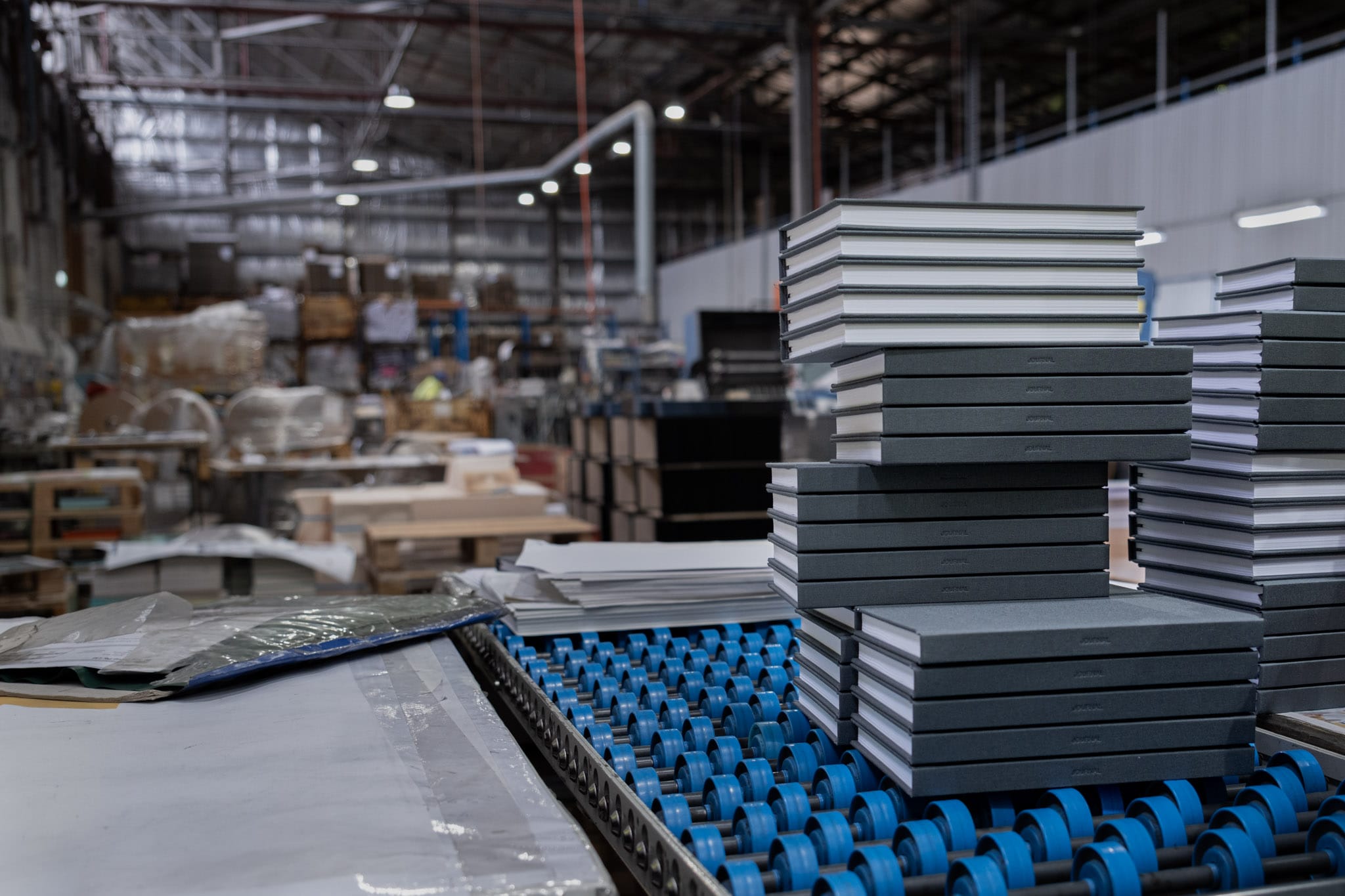
be still products are made in Melbourne. The journal, the planners and notebooks in production, and everything that follows.
The bindery
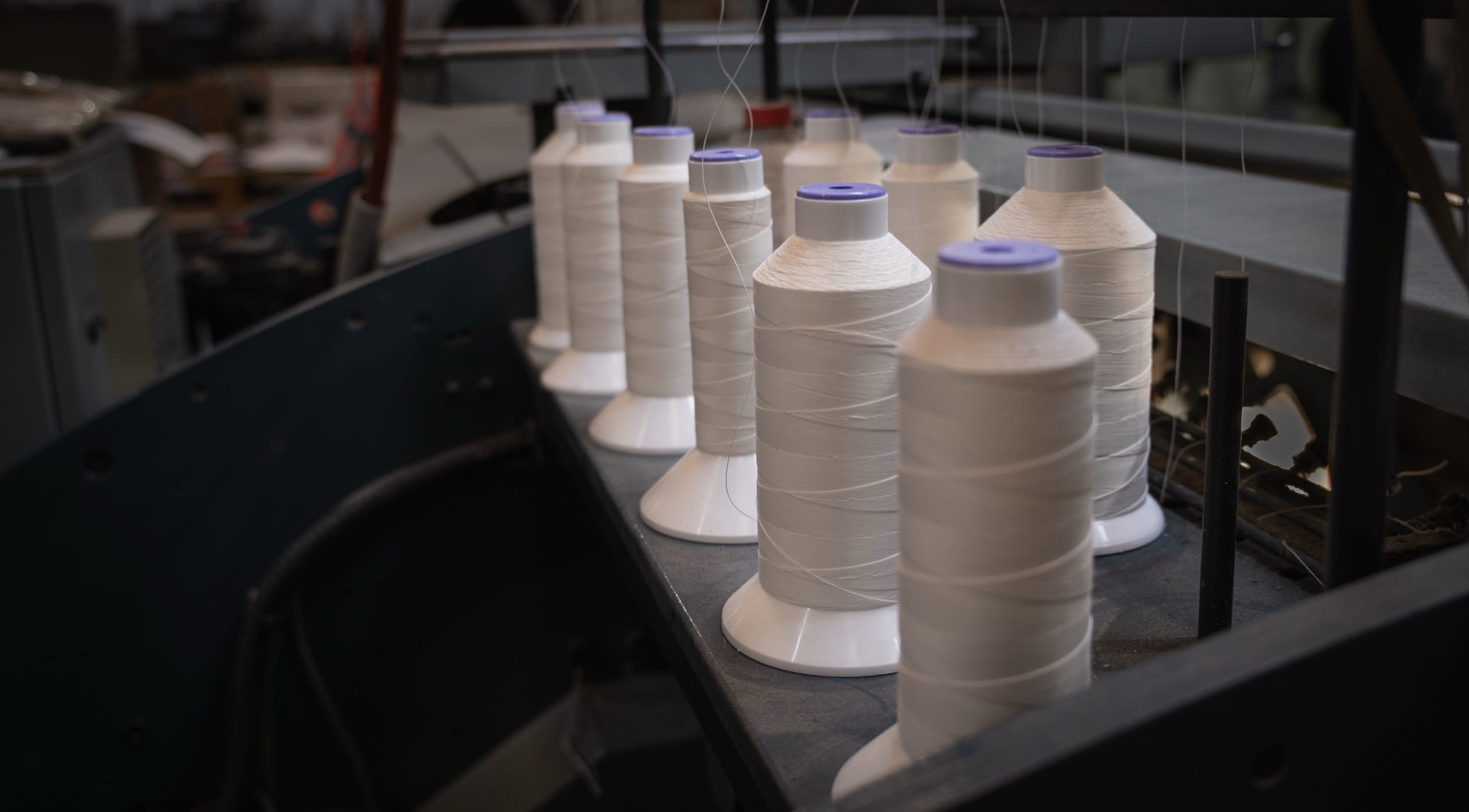
The journal is bound by Marvel Bookbinding, founded in 1986 and operating in Melbourne since. Marvel handle the section-sewing, the lay-flat construction, the cover application, the deboss, and the trimming. The Smyth-sewn binding is what allows the journal to open completely flat without breaking the spine, and it’s what makes the object hold up to daily writing for years rather than months.
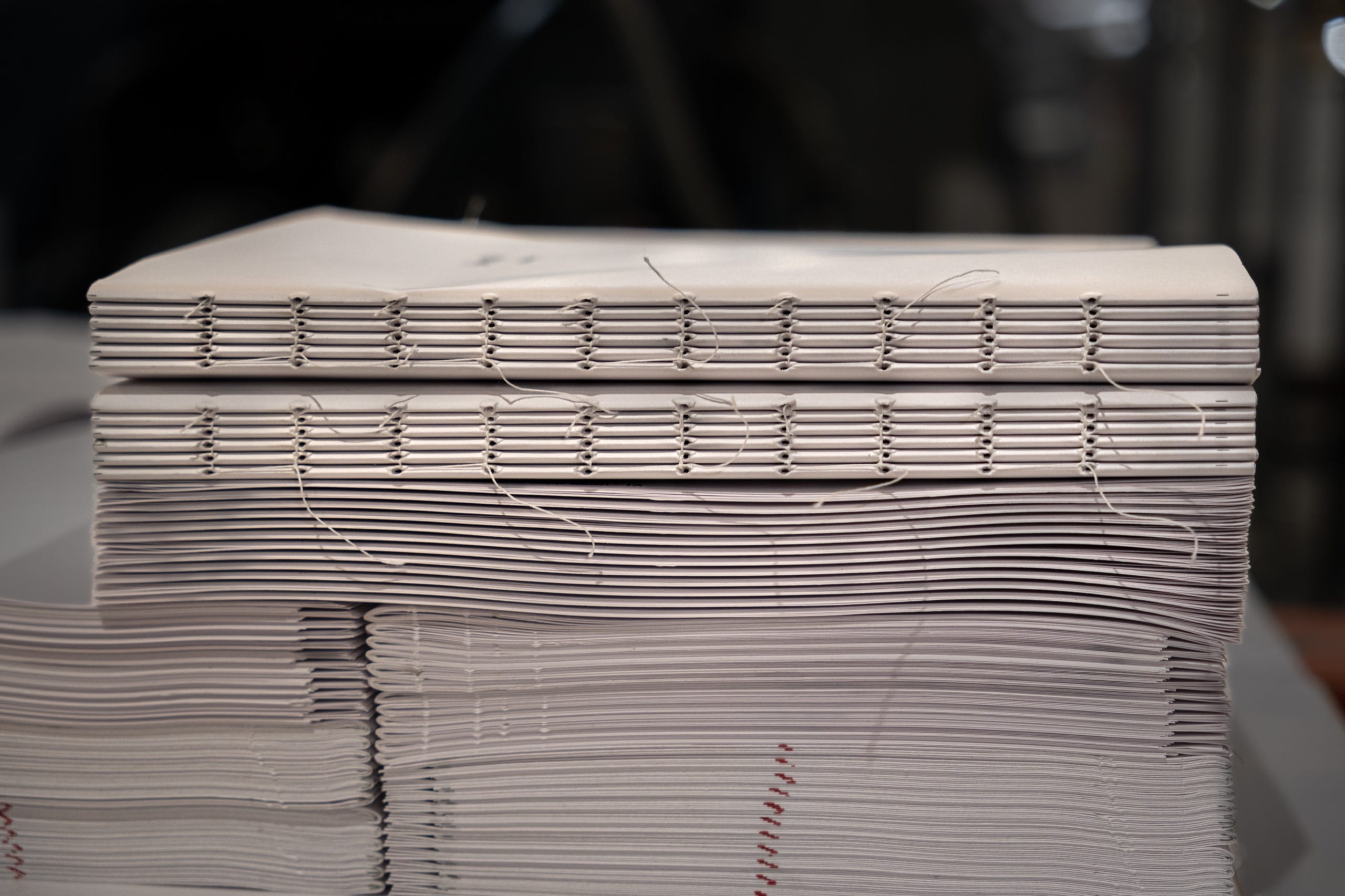
We contacted dozens of binders before landing on Marvel. Most rejected the order. Too small, too detailed, the wrong fit for their setup. The brief was specific and the standards were non-negotiable, and Marvel were the first to meet both without compromise. Every journal is made in the same workshop, by the same team, to the same specification.
The paper
The interior paper is Knight Smooth 120gsm, made in Italy by Gruppo Cordenons. Warm white, uncoated, chosen for how it feels under a pen rather than for opacity. We tested dozens of papers before settling on it, writing a full page on every sample. Most either felt wrong in the hand or read too bright and clinical. Knight Smooth didn’t.
The endpapers are Knight Smooth 140gsm in the same warm tone. Continuous with the interior, no contrast on opening the cover.
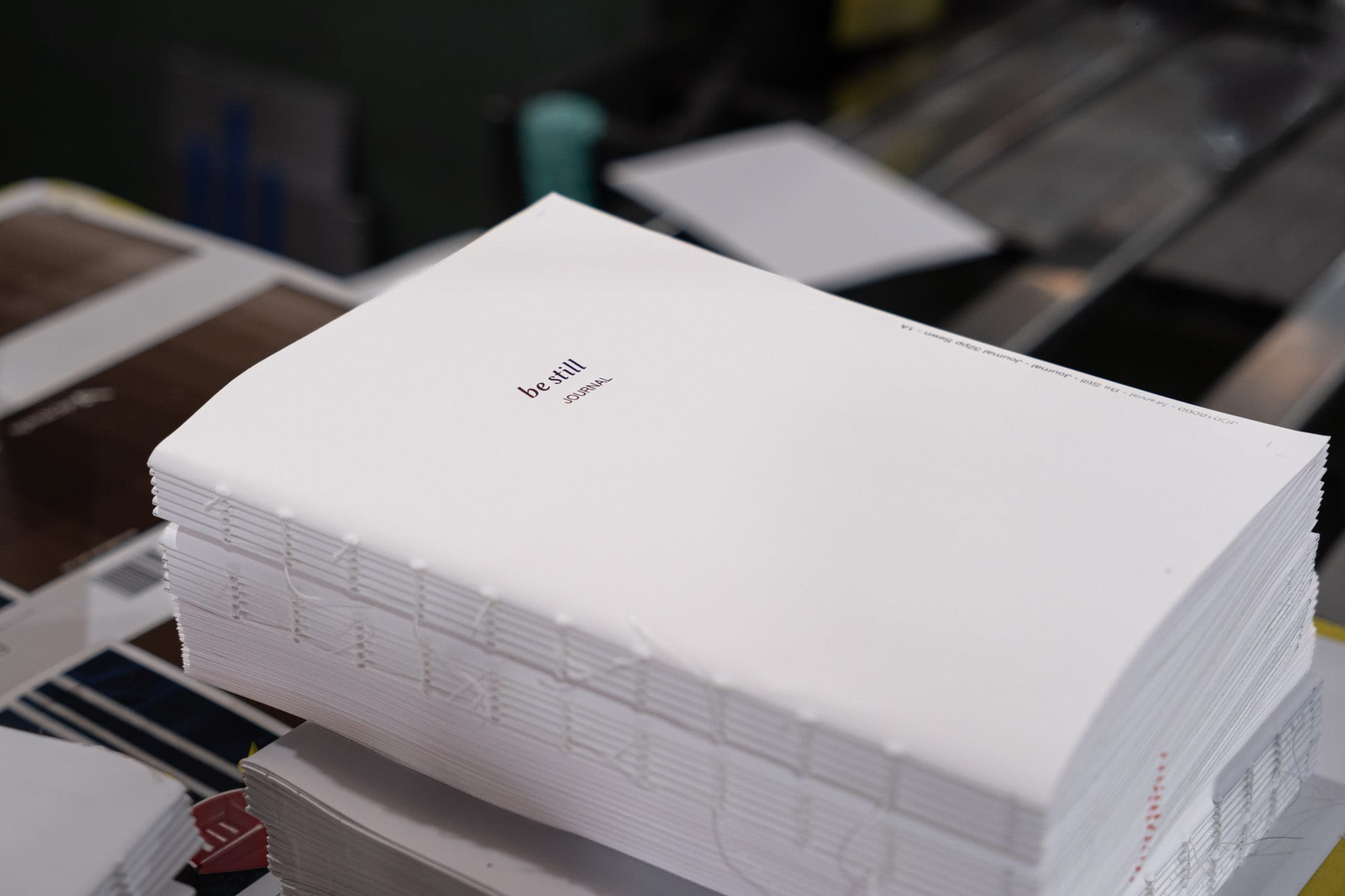
The cover
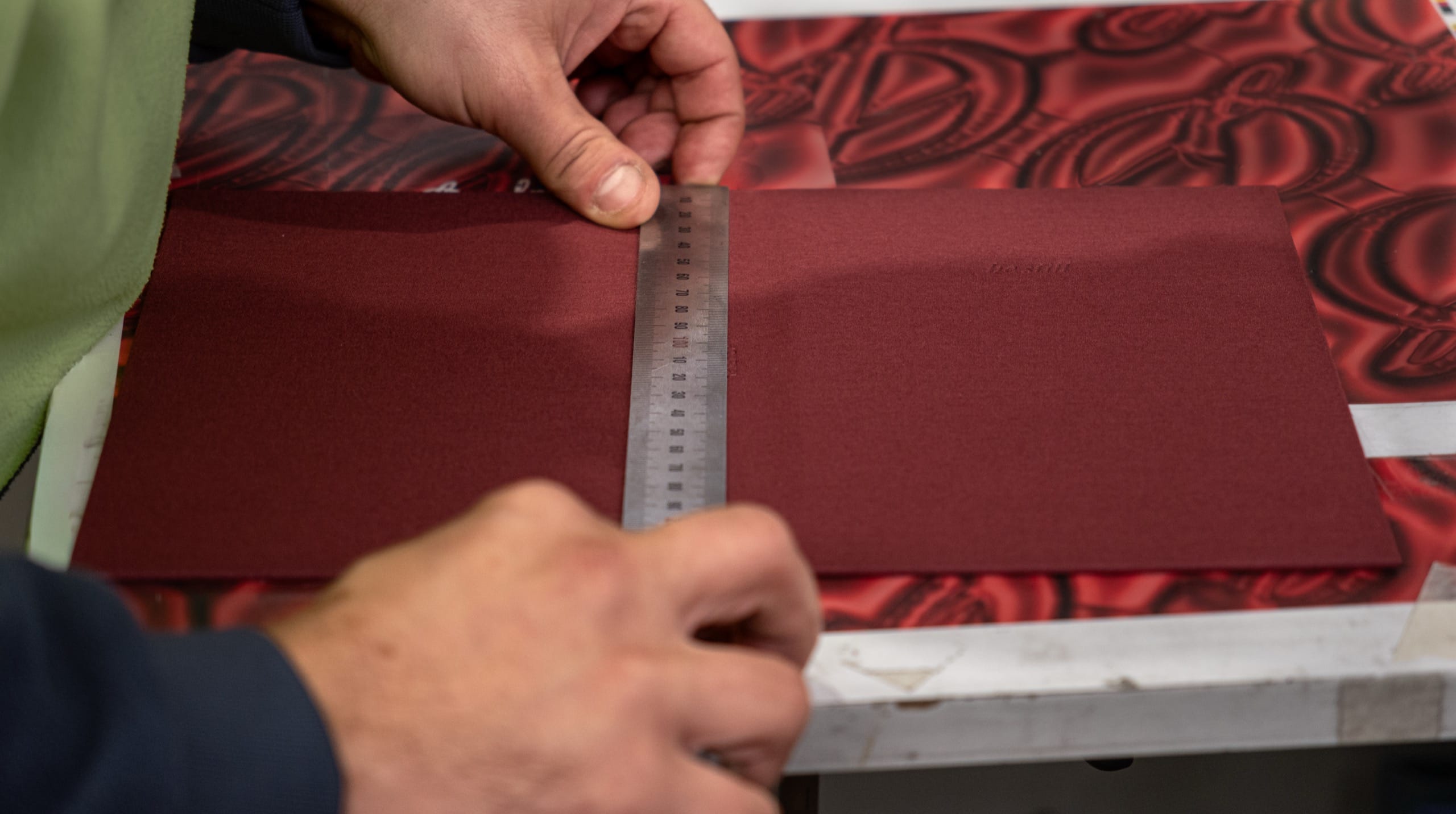
The cover is book cloth, matte and uncoated, with a subtle natural texture. The cloth is dyed through, so the colour holds even where the cloth meets a corner or an edge. Specific colourways are chosen per product and listed on each product page.
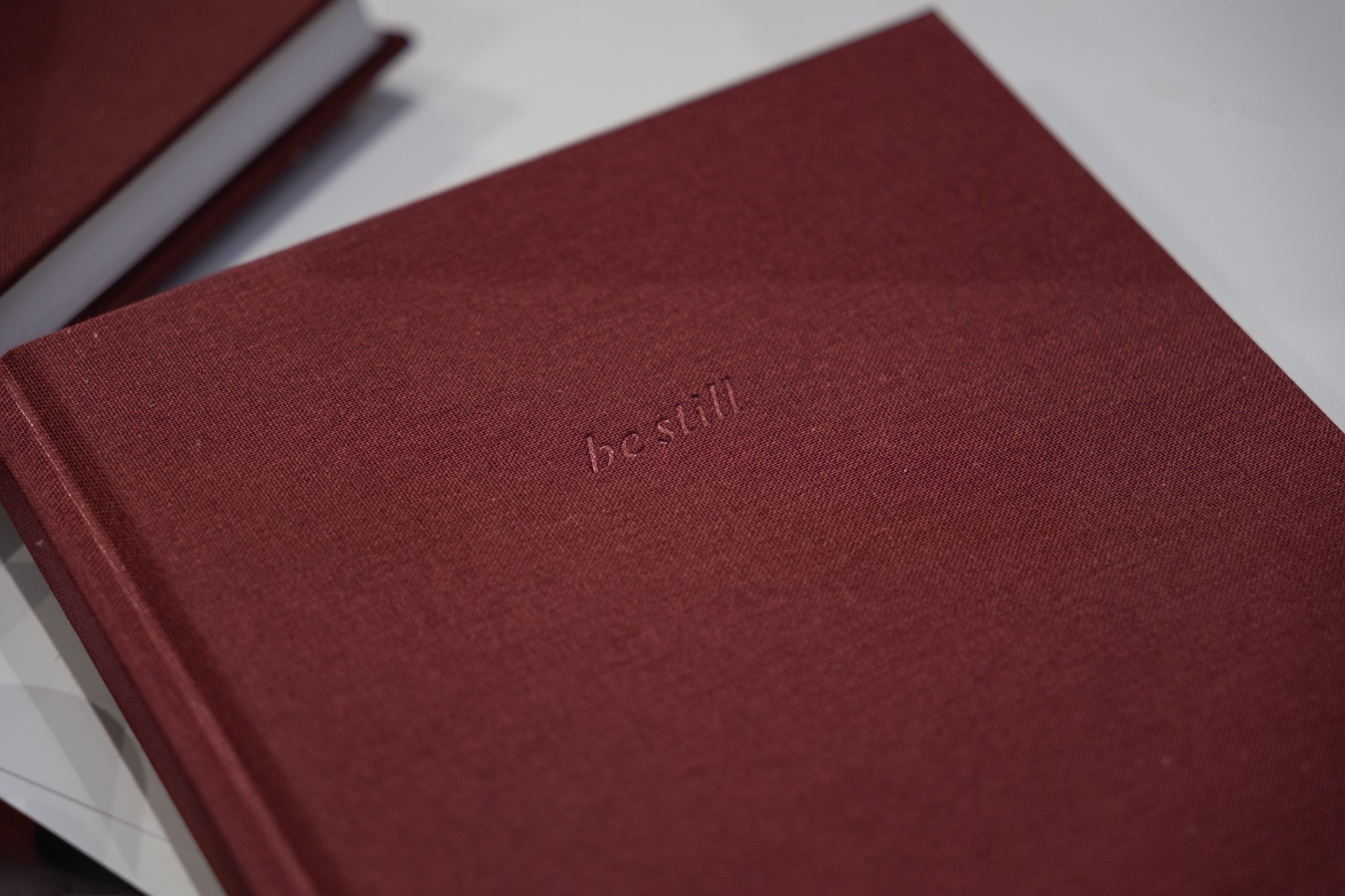
The board is 2400 micron, heavy enough to give the object its weight and protect the page block. The cover logo is a blind deboss. No foil, no print. The brand mark is pressed into the cloth and visible only at the right angle.
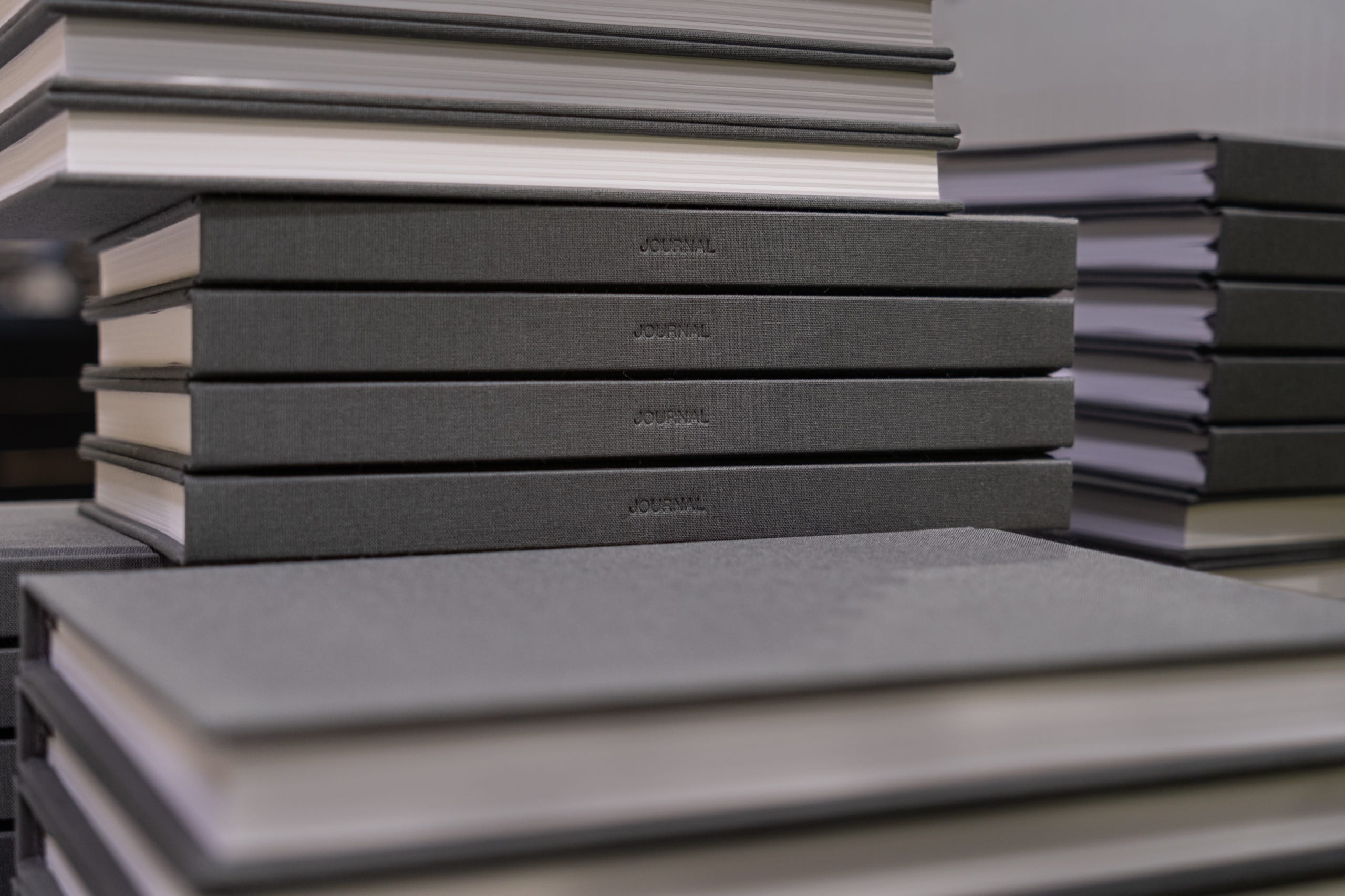
The interior
Interiors are printed K-only. One ink. No greys, no halftones, no screened colours. The softness in the layout comes from spacing, typography, and line weight, not from colour. It’s the harder way to print a journal and the cleaner result.

Why Melbourne
Making the journal overseas would be cheaper. We chose not to. Local production means we work directly with the bindery, sign off on every batch, and can respond to a problem within days rather than months. It also means every product carries the same line of accountability from start to finish.
The range will expand, but the production logic won’t change. One bindery, one standard, one place.